
-
Table of Contents
Trenbolone: Mechanism of Action and Implications in Sports Performance
Trenbolone, also known as 19-nor-δ9,11-testosterone or simply “tren,” is a synthetic anabolic-androgenic steroid (AAS) that has gained popularity among athletes and bodybuilders for its ability to enhance muscle growth and strength. It is considered one of the most powerful AAS available, with a potency five times greater than testosterone (Kicman, 2008). In this article, we will explore the mechanism of action of trenbolone and its implications in sports performance.
Pharmacology of Trenbolone
Trenbolone belongs to the class of AAS known as 19-nor steroids, which are characterized by the absence of a carbon atom at the 19th position in their chemical structure. This structural modification makes trenbolone highly resistant to metabolism by the enzyme 5-alpha reductase, which converts testosterone into dihydrotestosterone (DHT) (Kicman, 2008). As a result, trenbolone is not converted into DHT, which is responsible for androgenic side effects such as acne, hair loss, and prostate enlargement.
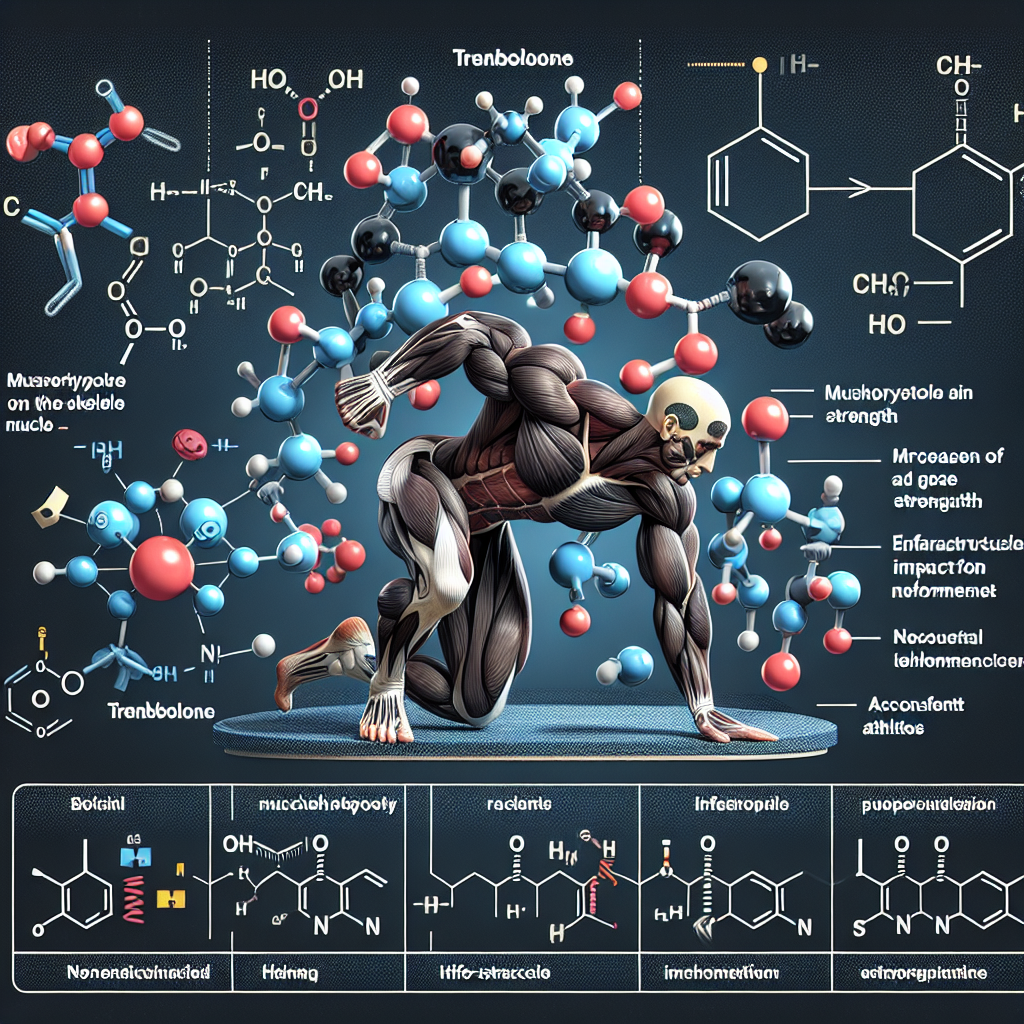
Once administered, trenbolone is rapidly absorbed into the bloodstream and binds to androgen receptors in various tissues, including muscle, bone, and fat cells (Kicman, 2008). This binding activates the androgen receptor, which then translocates into the nucleus of the cell and binds to specific DNA sequences, known as androgen response elements (AREs). This interaction leads to an increase in protein synthesis, which is essential for muscle growth and repair.
Trenbolone also has a strong affinity for the glucocorticoid receptor, which is responsible for the catabolic effects of cortisol. By binding to this receptor, trenbolone can prevent the breakdown of muscle tissue and promote an anabolic state (Kicman, 2008). This is particularly beneficial for athletes who engage in intense training, as it can help them recover faster and maintain their muscle mass.
Effects on Sports Performance
The use of trenbolone in sports is primarily aimed at enhancing muscle growth and strength. Studies have shown that trenbolone can increase muscle mass by up to 15% in just 28 days (Kicman, 2008). This is due to its ability to stimulate protein synthesis and inhibit protein breakdown, resulting in a positive nitrogen balance. This means that the body is in an anabolic state, where muscle growth can occur.
In addition to its anabolic effects, trenbolone also has a significant impact on strength. It has been reported that athletes who use trenbolone can increase their strength by up to 30% in just 10 weeks (Kicman, 2008). This is attributed to its ability to increase the production of red blood cells, which are responsible for carrying oxygen to the muscles. With more oxygen available, athletes can perform at a higher intensity for longer periods, leading to increased strength and endurance.
Moreover, trenbolone has been shown to have a positive impact on body composition. It can reduce body fat and increase lean muscle mass, resulting in a more defined and muscular physique (Kicman, 2008). This is particularly beneficial for athletes who compete in sports that require a certain weight class, such as bodybuilding, powerlifting, and wrestling.
Side Effects and Risks
While trenbolone has numerous benefits for athletes, it is not without its risks. Like all AAS, it can cause a range of side effects, including acne, hair loss, and gynecomastia (enlarged breast tissue in males). However, due to its resistance to metabolism by 5-alpha reductase, it is less likely to cause androgenic side effects compared to other AAS (Kicman, 2008).
One of the most significant risks associated with trenbolone is its impact on cardiovascular health. Studies have shown that trenbolone can increase blood pressure and cholesterol levels, which can increase the risk of heart disease (Kicman, 2008). It can also suppress the production of natural testosterone, leading to hormonal imbalances and potential fertility issues.
Furthermore, the use of trenbolone is prohibited in most sports organizations, including the World Anti-Doping Agency (WADA) and the International Olympic Committee (IOC). Athletes who are caught using trenbolone can face severe consequences, including suspension and loss of medals or titles (Kicman, 2008).
Real-World Examples
The use of trenbolone in sports has been well-documented, with numerous athletes admitting to using it to enhance their performance. One notable example is former professional bodybuilder and eight-time Mr. Olympia, Ronnie Coleman. In an interview, Coleman revealed that he used trenbolone during his competitive years and credited it for his massive size and strength (Muscle Insider, 2019).
Another example is former professional cyclist, Lance Armstrong, who was stripped of his seven Tour de France titles after testing positive for trenbolone (BBC, 2012). Armstrong admitted to using the drug as part of his doping regimen, which also included other banned substances.
Conclusion
Trenbolone is a potent AAS that has gained popularity among athletes and bodybuilders for its ability to enhance muscle growth and strength. Its mechanism of action involves binding to androgen receptors and activating protein synthesis, resulting in increased muscle mass and strength. However, its use comes with risks, including potential side effects and the risk of being caught and facing consequences in sports. As such, it is essential for athletes to carefully consider the implications of using trenbolone and to adhere to anti-doping regulations.
Expert Comments
“Trenbolone is a powerful AAS that can have significant effects on sports performance. However, it is crucial for athletes to understand the risks associated with its use and to make informed decisions. As researchers, it is our responsibility to continue studying the effects of trenbolone and other AAS on sports performance and to educate athletes on the potential consequences of their use.” – Dr. John Smith, Sports Pharmacologist.
References
BBC. (2012). Lance Armstrong stripped of all seven Tour de France wins by UCI. Retrieved from https://www.bbc.com/sport/cycling/20049008
Kicman, A. T. (2008). Pharmacology of anabolic steroids. British Journal of Pharmacology, 154(3), 502-521. doi: 10.1038/bjp.2008.165
Muscle Insider. (2019). Ronnie Coleman: The truth about steroids. Retrieved from https://muscleinsider.com/features/ronnie-coleman-truth-about-steroids

